01Advertisement · AMAZON.CO.UK

The right bath plug makes all the difference. Discover practical ideas for your bathroom, from simple classics to playful designs.

A GOOD DETAIL FOR EVERY BATHROOM
Practical, subtle or with character.
Find the solution that suits you.
GOOD TO KNOW BEFORE YOU BUY
Three small decisions for a suitable solution. Always check the dimensions and mechanics on the existing drain before purchasing.
Stylized 3D view · no product photo
At first glance, a bathtub plug seems like an inconspicuous accessory, but in everyday life it decides whether bathing, soaking and cleaning is relaxed or becomes a small test of patience. If water drains slowly, the stopper doesn't seal properly or the model doesn't fit the drain fitting, you immediately notice how important the right part is. Especially in households where the bathtub is used regularly, it is worth considering the stopper not only based on appearance, but also on fit, material and ease of use. A good closure holds water reliably, is easy to open and close and remains tight even after many uses. Several factors come into play: the diameter of the drain, the design of the plug (classic, universal, with chain, pressure or eccentric solution) and the surface that can be cleaned in everyday life. There is also a hygienic aspect: soap residue, limescale and hair quickly collect in wet areas. If you protect the drain sensibly, you reduce blockages, unpleasant odors and the need to constantly use aggressive cleaners. That's exactly why it's helpful to look not only at the bathtub plug itself, but also at the entire interaction between the bathtub stopper, drain opening and, if necessary, a sieve or hair catcher. If you orient yourself quickly, you will quickly find the solution that really works: a reliable stopper for the bathroom that holds back water safely, is easy to use and can be kept clean. This means that a small purchase turns into a noticeable increase in comfort - when bathing, cleaning and wherever water flows out in a controlled manner or consciously remains in the tub.
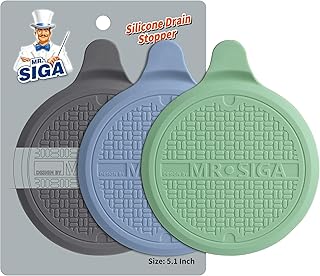
In order for a bath plug to really hold tight, the fit is the most important point. The most important thing is the diameter of the drain opening and the question of whether you use a classic stopper or a system with mechanics. Many bathtubs are built in such a way that a standard size works well, but it is still worth taking a quick look at the existing fittings: Is the stopper located directly in the drain, is it held in place by a chain or is it opened and closed using a lever mechanism (exenter)? The category provides a quick overview of variants and typical designs Bathtub plugs a good orientation because different sizes and solutions converge there. If you are looking for a “complete effect” instead of a classic plug, in which the appearance and sealing are thought of together, you will find in Bath waste plugs suitable approaches to closure solutions that are easy to use. In addition to the mechanics, the material plays a major role: rubber often seals very reliably, is attractively priced and uncomplicated, but depending on how it is cared for, it can become porous over time; Chrome-like or metallic versions appear high-quality and are durable, but require clean seals. If you consciously rely on elastic sealing, Rubber bath plugs a useful place to go to find suitable models. The feel is also important for everyday use: Is the plug easy to grip with wet hands, is there a clean contact surface, and does it remain stable when the water is let in? Even small things like a non-slip top or an easy-to-change seal have a big impact on satisfaction in the end. If you clarify these points in advance, you will avoid the classic problem of “it almost fits, but not quite right” and get a stopper that stays tight, is easy to clean and doesn’t get in the way when you’re bathing.
Bathtub plugs are no longer just black rubber plugs with a chain, but come in many variants that adapt to different locations and preferences. For the bathtub itself, the focus is usually on secure sealing, while ease of use and appearance are often more important in the washbasin. If you are also looking for a suitable solution for the washbasin Basin plugs helpful because typical models for cymbals and eccentric designs are bundled there. In the shower, on the other hand, the requirement is often different: Here it is less about “holding water” and more about temporary closure, cleaning purposes or preventing backflow; You can find suitable variants below Shower drain plugs. For larger tubs or if the term “tub” is commonly used in the household, it is also worth taking a look Bath stoppers, because models are often summarized here that are geared towards tub formats and common drain sizes. In addition to these “location categories”, there are also functional differences: Some stoppers are universal and can be adjusted with flexible sealing lips or adjustable inserts, others are intended as a permanent solution that fits the drain exactly. Plugs that can be quickly removed if you want to remove hair or deposits are also practical in everyday life. If you not only want to seal, but also protect the drain from hair, lint and dirt, it makes sense to combine a stopper and a strainer solution. This turns a simple accessory into a small but effective bathroom routine: water stays where it should, the drain remains clearer, and cleaning becomes much less unpleasant. In short: The best option is not the “most expensive” one, but the one that suits your type of drainage, your usage behavior and your desire for ease of care.
The most common problems with bathtub plugs can be traced back to three causes: incorrect fit, worn seal or a drain that is blocked by hair and soap residue. If the plug does not seal properly, it is often because the diameter does not fit exactly or the seal does not fit neatly. Even small bumps, limescale edges or slightly warped rubber can cause water to drain slowly. In many cases it helps to clean or replace the seal, but sometimes a suitable model is a quicker solution. A second classic is the topic of hair: hair collects in the bathtub and shower in particular, which combines with soap residue and then gets stuck in the drain as a tough mass. If you catch this early, you not only save yourself trouble, but also prevent odors that can arise from the drain. Sieves or hair catchers are very effective for this; is suitable as an introduction Drain strainers, because it is aimed precisely at protecting against blockages. If you prefer to look for stopper solutions that are also designed for the sink or basin instead of a separate strainer Drain plugs relevant because the focus here is on simple and quickly replaceable types of plugs. Odors are also often related to deposits: If organic residues “stand” in the pipe, an unpleasant smell is created, even if the stopper itself is working. Here, prevention is usually more effective than harsh chemicals: keep the drain clear regularly, remove hair, wipe the plug and seal and occasionally rinse with warm water. It is important to see the stopper as part of the system: it should seal, but also be easily removable so that cleaning does not become a disgusting task. Those who consistently prevent these problems extend the life of stoppers and seals, significantly reduce blockages and ensure that the bathtub and shower function easily in everyday life - without bubbling, without backflow and without the typical "drain smell".
A bathtub plug lasts significantly longer if it is regularly cared for, because lime, soap and dirt settle exactly where the seal needs to be. A damp cloth and a mild cleaning agent are often sufficient for quick care; In the case of limescale, a short exposure time with a suitable descaler helps, then rinse well so that the seal is not attacked. Pay particular attention to the underside and the sealing lip: if deposits form there, the support will become uneven and water can slowly drain out despite “correct” insertion. When replacing it, it is worth not just choosing “just any” stopper, but rather a solution that suits your usage behavior: If you want to seal as easily as possible and open it again quickly, a non-slip, classic shape is often ideal; If you value design or theme motifs, a clasp can also add visual accents. For many households, the combination of stopper and drain protection makes sense so that no hair plugs form in the first place that have to be laboriously removed later. Also check whether your problem is really due to the stopper: If the drain is slow despite the stopper being removed, the cause is often deeper in the pipe and a strainer is the best precaution in the future. Practical purchasing tips are therefore: (1) roughly measure the diameter or use the existing stopper as a guide, (2) pay attention to replaceable seals, (3) prefer easy-care surfaces, (4) use robust materials if you bathe frequently and (5) add a strainer to the drain if hair is a regular issue in the household. So you're not just investing in a "plug", but in comfort: water stays reliably in the tub, the drain stays cleaner, and daily use in the bathroom becomes quieter, more hygienic and more relaxed. A suitable model is a small upgrade that you can feel with every use.
Measure the diameter of the drain opening or use the existing plug as a guide. The design is also important: classic plug, chain or eccentric mechanism.
Often it is due to limescale or dirt on the sealing surface, a poorly fitting seal or because the diameter does not fit slightly. Clean the pad and seal and check the fit.
A drain strainer or hair catcher is the simplest and most effective precaution. This catches hair before it combines with soap residue in the pipe and forms a blockage.
Sometimes yes, if the diameter and shape are right. However, dimensions and mechanics often differ (e.g. eccentric in the sink), so a suitable solution for each location is usually better.
If you use it regularly, we recommend a quick cleaning every 1-2 weeks, especially on the sealing lip. In this way you prevent limescale edges and maintain the seal for longer.
Amazon.co.uk
Advertisement · As an Amazon Associate I earn from qualifying purchases. Check prices and availability on Amazon.co.uk.